Backing the people building AI for every language
Roughly 7,000 languages are spoken on Earth. Fewer than 100 are meaningfully served by frontier AI.
That gap isn't abstract. Moroccan Arabic has more than 30 million speakers. Tagalog: 80 million. Yoruba: 45 million. Each is the daily language of a population larger than most countries in Europe, and each is effectively absent from the models the industry is scaling.
A lot of that gap is already being closed by independent researchers and developers, scattered across the world, working language by language and dataset by dataset. From speaking with some of them, we've realized how many people are doing this work separately, often with very little in the way of resources or support. Today we're launching No Language Forgotten, a program to bring those people together and find practical ways to help.
What we're actually doing
The core of the program is community. Most of the people doing this work are doing it on their own. We're giving them a place to find each other, share what they're learning, and stop building alone.
A few specifics:
- A shared toolkit, starting with the open-source pipeline Omar Kamali used to build Sawalni — adaptable to other languages and extended over time by the builders in the network.
- A peer community of builders trading what works: training methods, evaluation, data approaches, deployment patterns.
- Visibility and distribution. Storytelling that brings each builder's work to a wider audience — and pulls more people into the work itself.
- Compute when it's the bottleneck, running on AMD Instinct hardware thanks to AMD.
- Accessibility. Running these models locally isn't realistic for most of the people who'd benefit from them. Featherless hosts them so anyone can try use themin a browser.
The first builders

Omar Kamali — Morocco.
Native Language: Moroccan Arabic (Darija). Leads a team building agentic LLMs at Blue Yonder by day. After hours, the builder behind Sawalni — the first LLM for Moroccan Arabic, a language with 30M+ daily speakers. In his early days, Omar shipped v1 in six months — self-funded, with no peers in Morocco working on the same problem. Builder of wikilangs.org, now hosting 1,800+ NLP models across 300+ languages.
"The real work is the data and the community."
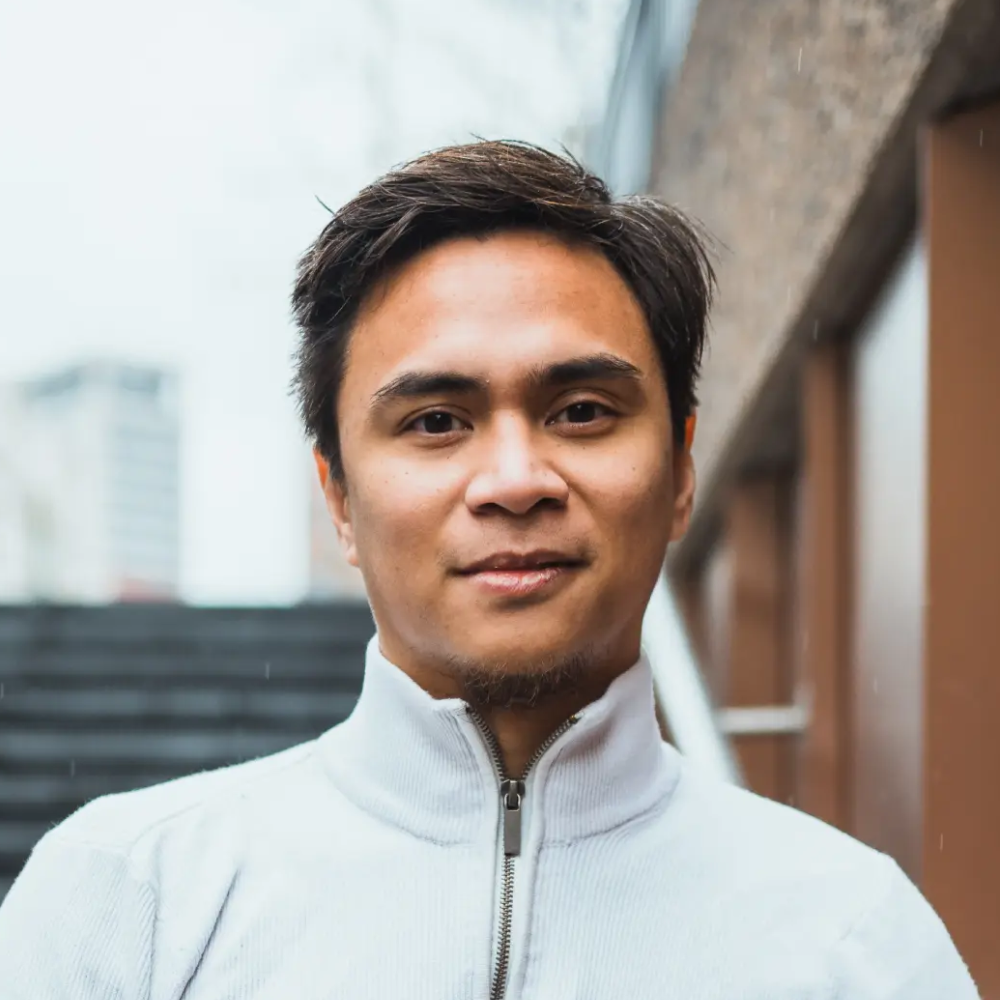
Tim Santos — Native Language: Tagalog. Director of Product at Graphcore by day. After hours, a pioneer and community enabler for Philippine-language AI. In his early days as a researcher, Tim collected hundreds of hours of voice data by travelling across the archipelago, and helped create one of the most comprehensive and largest web-mined text corpora for multiple Philippine languages. Spurred by the insights uncovered from the Philippine AI Report which he initiated in 2025, he launched the Sapin-sapin Initiative (Sariling Ai PINas), reviving the foundational work on Philippine languages.
Our linguistic diversity of 180 languages and tech-native population make for a uniquely complex environment, especially when you factor in our resource constraints. It is not easy—it takes a village for us to succeed. That is precisely why I have made community collaboration the foundation of every single initiative for which we’re supercharging here with Featherless AI
Get involved
- Working on an underserved language? Talk to us. The next builders are being added now.
- Want to help the community? Open call. Researchers, engineers, native speakers, organizations — if you can contribute time, data, or expertise to the builders, we want to connect you.
- Press, researchers, community organizations. Help us share the word.
- Everyone else. Stay tuned. Soon you'll be able to try models in your own language.
There are more people doing this work than most realize. We're here to help them find each other.
Related articles
Start building under 3 minutes