FAQ
Frequently asked questions
What's the cheapest way to run coding agents at scale?
A dedicated node at a flat monthly price. Per-token APIs charge for every token, and agents generate huge volume, so your bill grows with each agent you add. A Featherless Dedicated Coding Node runs GLM 5.3 on AMD MI325X for one fixed cost: add agents at no extra charge until the node is full. For the calculator's default team (10 developers, mixed agent use, agents running around the clock, one node) that works out to $7.5K/mo flat vs. roughly $37K/mo metered on GPT-6.1 Sol or Claude Sonnet 5.5, and about $73K/mo on Claude Opus 5.5, at list prices checked in November 2026 with 70% cache hits. If your agents only run during work hours, metered drops to about $11K and $22K. Note: estimates from our internal benchmarks; your volume will differ.
Is GLM 5.3 good enough for coding vs. Claude Opus 5.5 or GPT-6.1?
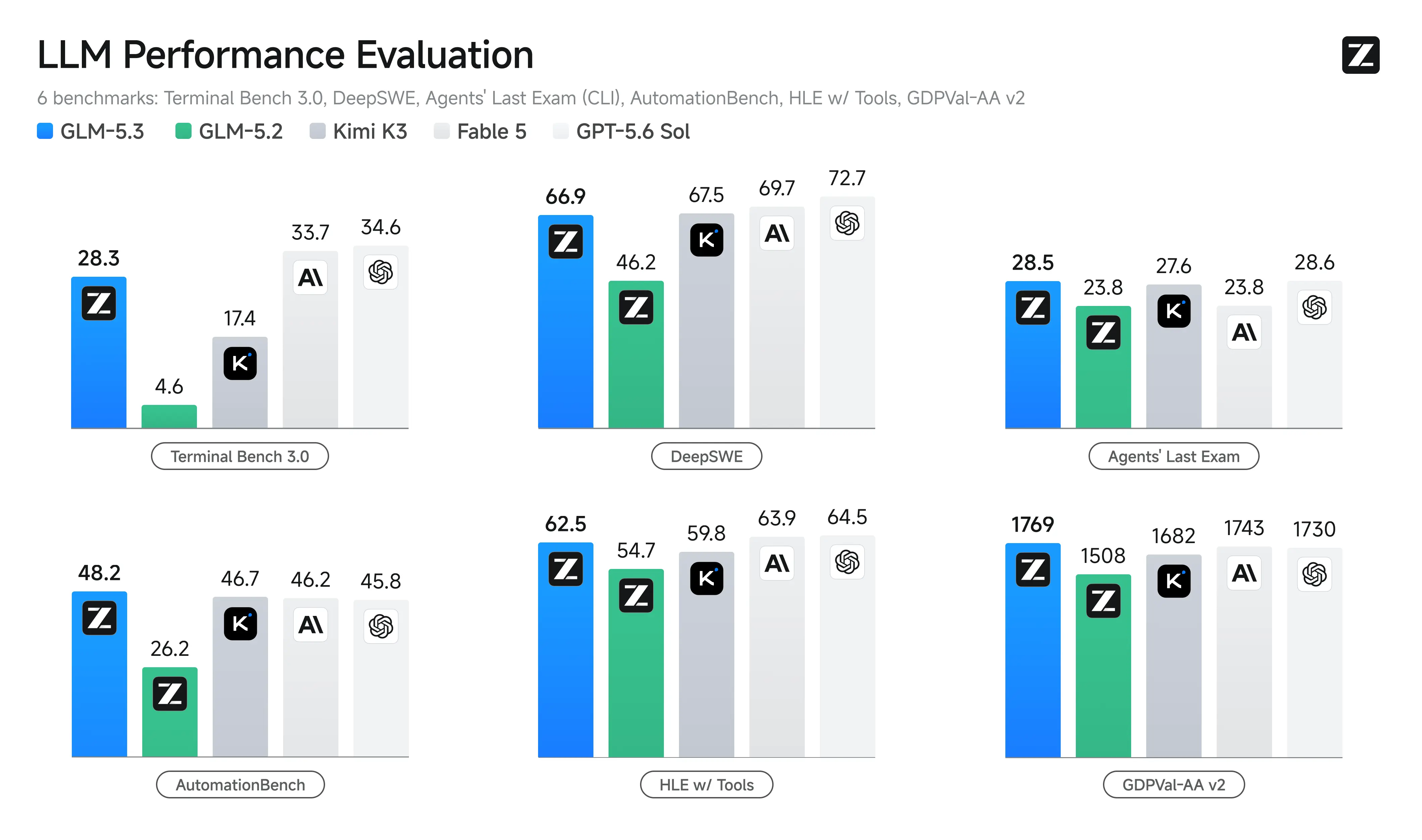
Our team and our customers say yes. For the read-edit-test loop coding agents actually run, GLM 5.3 holds its own against frontier models, and the cost difference closes any small gap. Best answer: prove it on your own repo. We'll run a POC on your codebase so your team judges quality before you spend a dollar.
What's a cheaper alternative to OpenRouter, GitHub Copilot, or Claude Code?
A Featherless Dedicated Coding Node. It's a drop in for the same tools — Claude and OpenAI compatible — but swaps per token and per seat metering for a flat monthly cost.
Can I use GLM 5.3 with Claude Code, Cursor, and other coding agents?
Yes. The endpoint is Claude and OpenAI compatible, so it works with Claude Code, Cursor, Cline, Continue, Aider, the OpenAI and Anthropic SDKs, and your own agents. Most teams switch by changing the base URL and API key — no migration project.
How much does it cost to run coding agents 24/7?
$7.5K/mo per node, flat. In our benchmark one node ran up to 8 concurrent agent sessions, which comes to about 118B tokens a month (0.8B of them output) around the clock. Running agents overnight doesn't change the bill; you add a node only when you need more than 8 sessions at once.
Why does Featherless use AMD MI325 instead of NVIDIA?
Three reasons. We have supply. We have proprietary optimization for GLM 5.3 on AMD. And compared with 8xH100s, it lowers the entry price from $20K per month to $7.5K, making it far more accessible.
Is my source code kept private?
Yes. A dedicated node is reserved and isolated for your organization — not shared infrastructure — so your code, prompts, and context stay inside your trust boundary. We support specific compliance and data residency needs on request.
What context window does it support?
A half node supports up to a 256K token context window — enough for repository scale agent sessions. A full node supports up to 1M. Our customers rarely need larger context; it's occasional. The industry average is around 20K input tokens.
Who is Featherless Dedicated Coding Nodes for?
Any engineering team spending more than about $7.5K/month on coding AI. On Claude Sonnet 5.5 or GPT-6.1 Sol pricing with mixed agent use, that's about 3 developers if agents run around the clock, or about 7 if they only run during work hours. With light agent use it takes roughly 15 to 35 developers. If your per-token or per-seat bill keeps climbing as you add agents, the economics work.